
Lost Threads of Gamchha
by Nishtha Kumar
If traditions were Instagram posts, would Gen-Z even double-tap? Heritage doesn’t come with an aesthetic filter, so we’ve left it in the drafts—unexplored, unnoticed. The gamchha, once an everyday essential, is just another cultural ghosting case. But is our detachment natural, or are we losing something we don’t even realise we need?

In a world where global trends dominate our feeds and Western aesthetics shape our style choices, there’s little room for the traditions we come from. Indian Gen-Z is more connected than ever—but not to their culture. The fabrics, rituals, and crafts that once defined generations are now just background noise in a world obsessed with the next big thing.
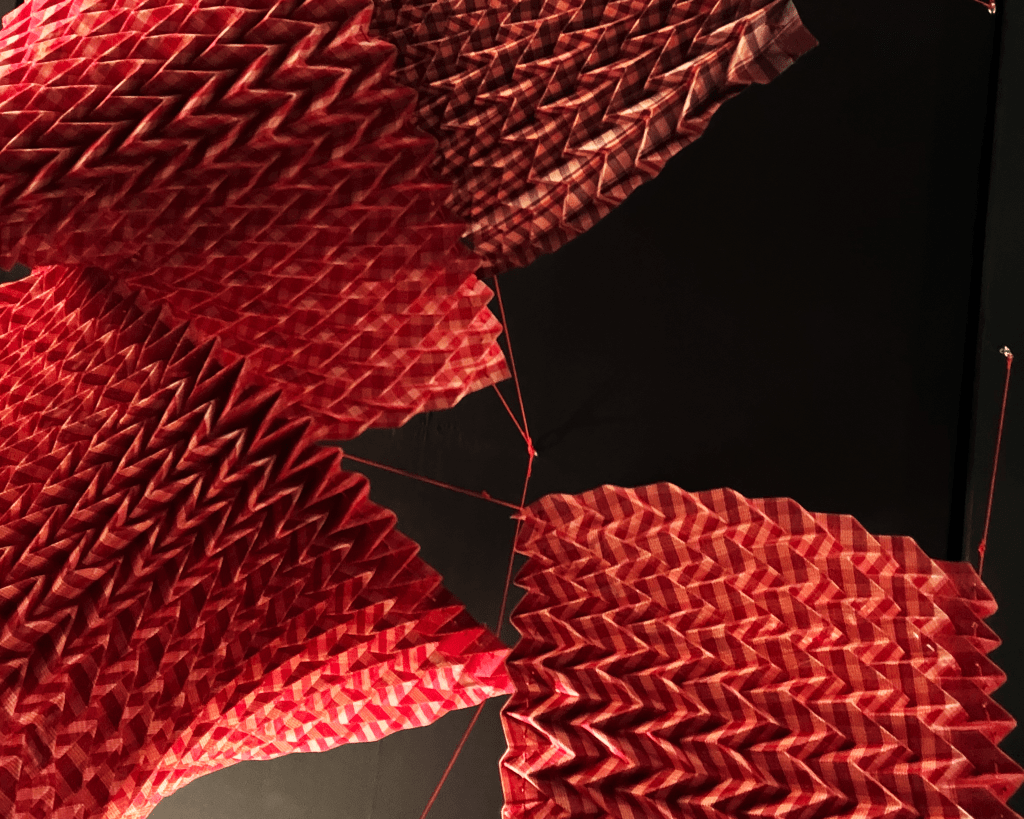
The gamchha—a simple, checkered cloth seen across India—has been wrapped around heads, shoulders, and waists for centuries. Yet, for most youngsters, it barely registers as more than an old man’s towel. The Gamchha Exhibition at the National Crafts Museum, Delhi (March 1-10, 2025), aimed to prove it’s more than just fabric—it’s a legacy. It showcased the cloth not just as an everyday essential but as a symbol of craftsmanship, identity, and resilience—one that modern India has left behind.

Pratima Sinha, 73, a homemaker who spent over 65 years in Bihar, speaks of the textile with the kind of warmth most reserve for family heirlooms. “People nowadays wrap their babies in Muslin, but when I was born, I was wrapped in a gamchha. My parents, my siblings—everyone in Patna used it in some way. It wasn’t just cloth—it was a way of life.”
In places like Bihar and Assam, the textile is still a household essential, doubling as a towel, a bag, a cooling wrap, or even a makeshift seat in the fields. “In Patna, it doesn’t matter if you’re rich or poor. The angochha is for everyone,” she adds. But in urban India? It has practically disappeared—not just from wardrobes, but from memory itself. (Note: The gamchha is also known as angochha, in Bihar.)
For most young Indians, the cloth isn’t even on the radar. Many don’t associate it with their own culture. “We just don’t talk about these things,” says Garima Pant, 19, a BTech student at IIT BHU. “If our schools, social media, and cities don’t make space for heritage, how are we supposed to care?” She was visiting Delhi for a holiday with her family and came to the exhibition only because her parents suggested it.


From our wardrobes to our playlists, Western culture has become the blueprint. We consume international fast fashion but dismiss homegrown textiles, proudly thrift second-hand Levi’s while overlooking traditional handlooms. In a scroll-heavy, trend-obsessed world, we’ve unconsciously distanced ourselves from what once defined Indian identity.
“I knew about it, but only as something older men wear,” says Tiya Chugh, 20, a Fashion Communication student at Pearl Academy. “I never thought of it as something significant.”
And that’s the real issue—Gen Z isn’t just detached from gamchha; we’re detached from our tradition as a whole. Whether it’s textiles, regional languages, or indigenous crafts, younger generations have grown up with less exposure and even less curiosity. The blame doesn’t lie solely with us—modern education, globalisation, and urban migration have rewritten what it means to stay “connected.”
For older generations, this disconnect isn’t just concerning—it’s personal. Since moving to Delhi three years ago, Sinha has watched her grandchildren grow up without any link to the textile she once considered inseparable from daily life. “I haven’t seen an angochha being used here. My grandson doesn’t even know the word—he laughs when he hears it. It’s like it never existed.”
And the textile isn’t the only thing disappearing. Regional languages, folk traditions, and even recipes once passed down without a second thought are slowly fading away. What happens when an entire generation grows up without these markers of identity? What does it mean when the things that once connected us to our history become ‘irrelevant’?
Not everyone sees this as a problem. Some argue that culture naturally evolves and that holding onto traditions shouldn’t feel like an obligation. Keya Tripathi, a 19-year-old Economics student of Delhi Technological University questions the push for revival: “Isn’t it normal for some things to fade away? My generation connects through different things now—music, social media, global fashion. Just because we don’t use something anymore doesn’t mean we’ve lost who we are.”
But others disagree. Gaurisha Arora, 20, a Fashion Communication student at Pearl Academy, counters, “If we don’t preserve the things that are uniquely ours, then what’s left? We borrow so much from other cultures, but we don’t even explore our own. That’s what’s strange to me.”
So, if given the chance, would Gen Z actually reconnect with their heritage? If gamchha were more visible—not just in museums, but in everyday conversations, in contemporary culture—would we see it differently? Would we care? Or would we continue watching our roots fade, while double-tapping aestheticised versions of them online?
Hello,
We’re Genzette

Stay ahead with GenZette’s weekly dose of trends, tips, and inspo. Fashion, beauty, and lifestyle — Gen Z style.
Join the fun!
Stay updated with our latest articles and reels by joining our blog.
 GENZETTE